House Dressing
For homeowners

Roof rejuvenationYour roof is drying out.
Not failing.

A plant-based, patented treatment that puts the oil back into asphalt shingles. One visit, typically a fraction of replacement cost, quoted after inspection.

A homeowner couple on their porch watching a technician mist their asphalt shingle roof at sunsetPlant-based
Powered by SoyLeiUS Patent 11773265B2Iowa State University chemistryMade with USDA BioPreferred SoyLei chemistryPublished bench data
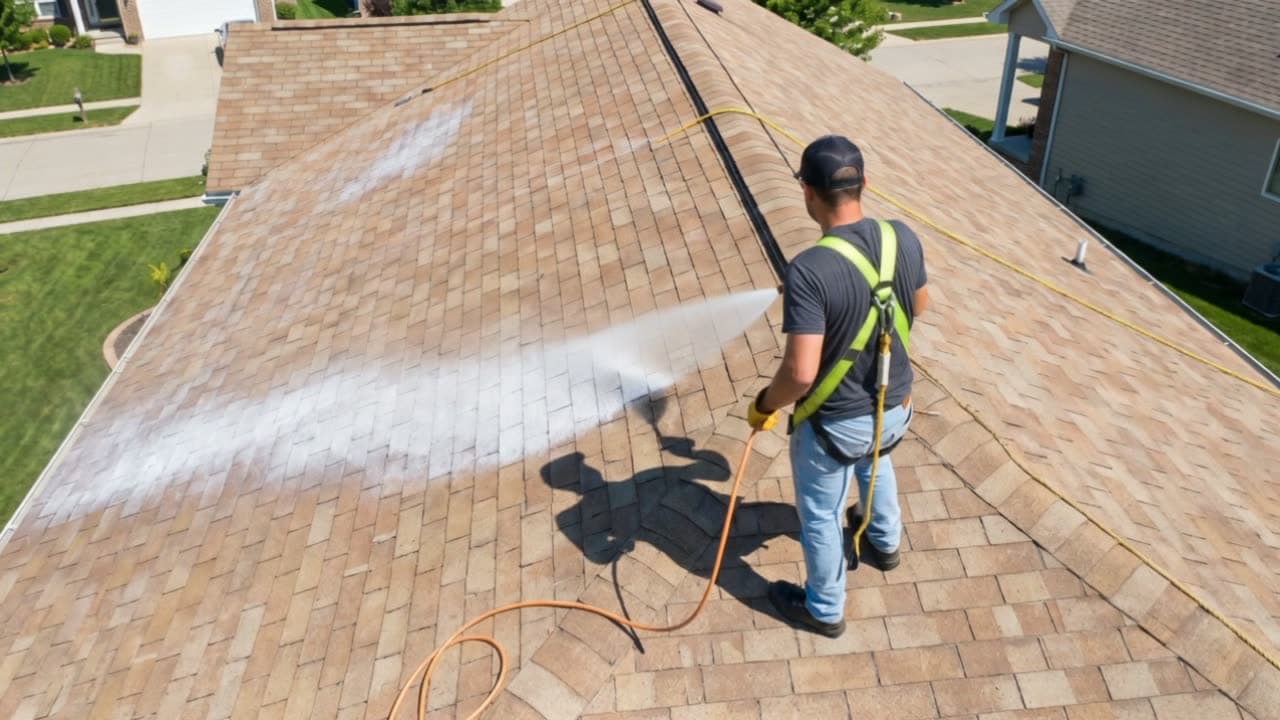
House Dressing being mist-applied across an asphalt shingle roof

Sun pulls the oil out.

We put it back.

One visit. Before the granules go.

Which roof is yours?

New, middle-aged or older. The answer changes, the product does not.

Asphalt shingles are oil and stone. Sun takes the oil, the stone follows. Where your roof sits on that curve decides what a treatment does for you.

Under 7 yearsEarly, and early is good

A new roof does not need rescuing. It needs a plan.

What is happening

From the day it goes on, UV and heat start pulling oil out of the asphalt. Nothing looks wrong yet because the granules are still fully anchored.

What a treatment does

Treating before granule loss shows up keeps the flexibility you paid for instead of trying to win it back later. An applicator can inspect, set a baseline and tell you the right year to start.

If it truly looks new, you may be told to wait a couple of years. That is the answer working.

7 to 15 yearsThe sweet spot

Grit in the gutters, a dull surface, edges starting to lift.

What is happening

The oil is leaving. Shingles are stiffening, granules are washing off, and the asphalt underneath is starting to take sun directly.

What a treatment does

One treatment soaks into the binder, helps restore flexibility and helps re-anchor the granules that are still there. Against untreated controls, independent testing measured granule adhesion improved by 50 percent.

This is the roof the product was built for, and where a few thousand dollars does the most work.

15 years and upStill lying flat? Still a candidate

Older roofs are where a treatment pays back fastest.

What is happening

The alternative is a $20,000 to $40,000 replacement. If the shingles are intact, the deck is sound and there are no leaks, the roof has years left in it.

What a treatment does

A treatment is designed to extend that runway and push replacement out. Some owners treat again a few years later; that is a separate job, priced on its own.

Cracked, curling or missing shingles, or any active leak, means repair first. Your applicator will say so on the roof, not from the driveway.

Past the point?

Any of these means repair or replace first. Rejuvenation is maintenance for a sound roof.

  • !An active leak, or water stains on the ceiling
  • !Cracked, curling or missing shingles across large areas
  • !Soft, sagging or rotten decking
  • !Storm damage with an insurance claim in progress

Three questions. One straight answer.

No email needed. It tells you which conversation you are about to have with an applicator, including the one where they say not yet.

Is my roof a candidate?

1 of 3

What is on your roof?

Why homeowners do it

Different roof, different weather, same fix.

Every figure below comes from the manufacturer technical data sheet, tested against untreated shingles and the market-leading treatment.

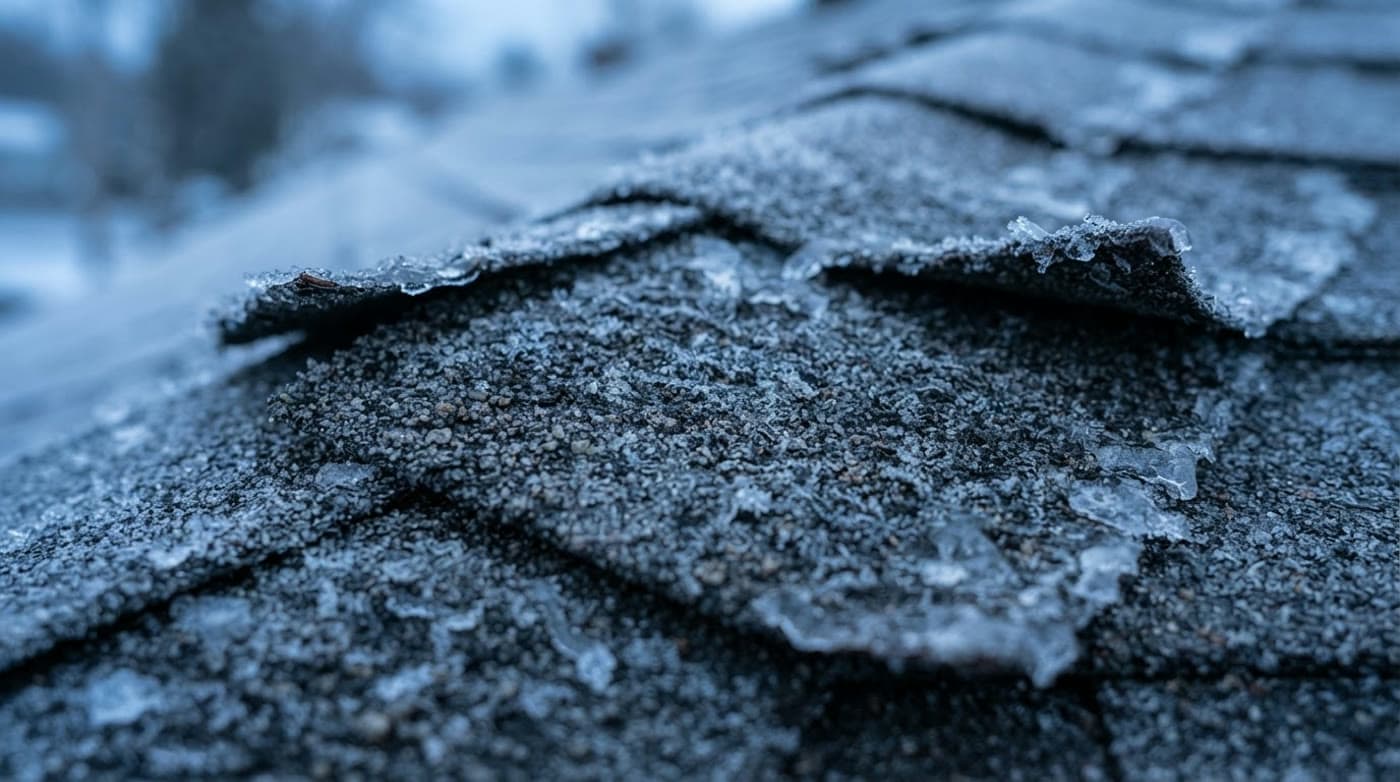
Frost on aged gray asphalt shingles at winter dawnCold, brittle winters

Canada, the Midwest, the Northeast

Pliable at 55F where untreated shingles failed.

Cold is what turns a dry shingle into a cracked one: ice moves, someone walks the roof, a tab snaps. Treated shingles passed the pliability test at 55F. The untreated control did not.

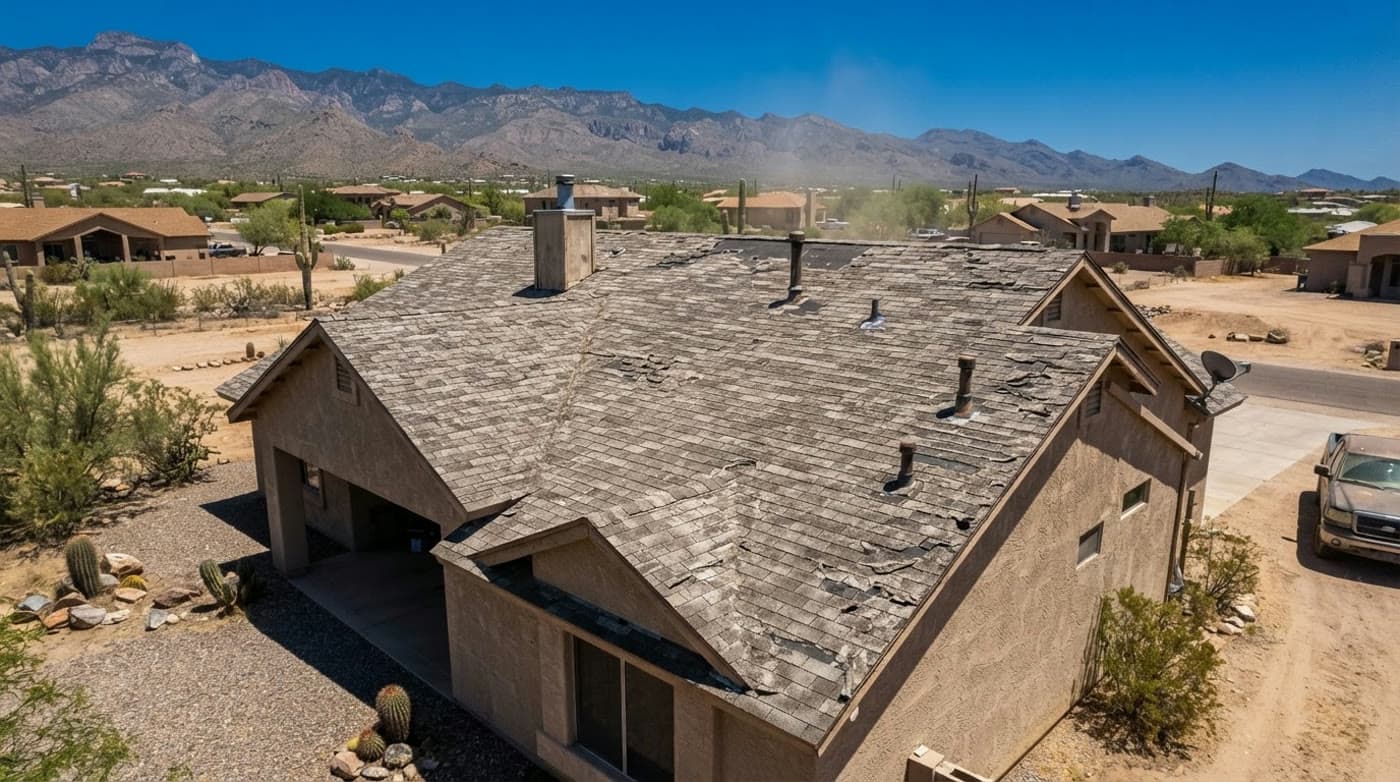
A sun-baked asphalt shingle roof with bare patches where granules have worn awaySun-baked south

Arizona, Texas, Florida, Nevada, Southern California

UV is what takes the oil. Granules are the sunscreen.

Granule adhesion improved 50 percent in testing, roughly three times the market leader. Keeping granules on the roof keeps the asphalt underneath out of direct sun, which is the whole game in a hot climate.

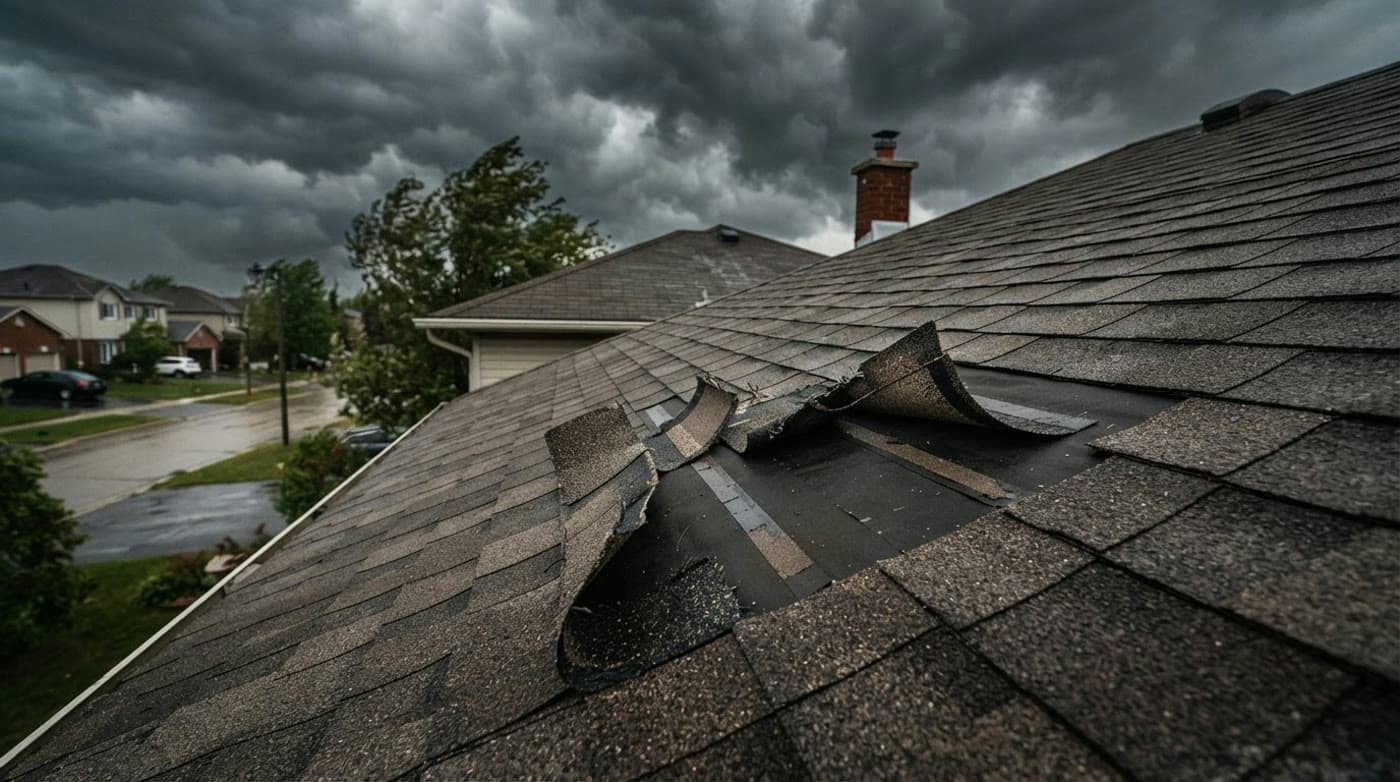
Wind lifting the tab edges of asphalt shingles under dark storm cloudsWind and blow-off

Coasts, the Plains, the Prairies, anywhere gusty

Dry seal strips are why tabs lift.

Every shingle has an adhesive strip that softens and bonds in the sun when new, then dries out with age. The manufacturer designed the treatment to help soften that dried asphalt so tabs can re-bond in the sun. Its claim, published on its own pages, not a wind rating.

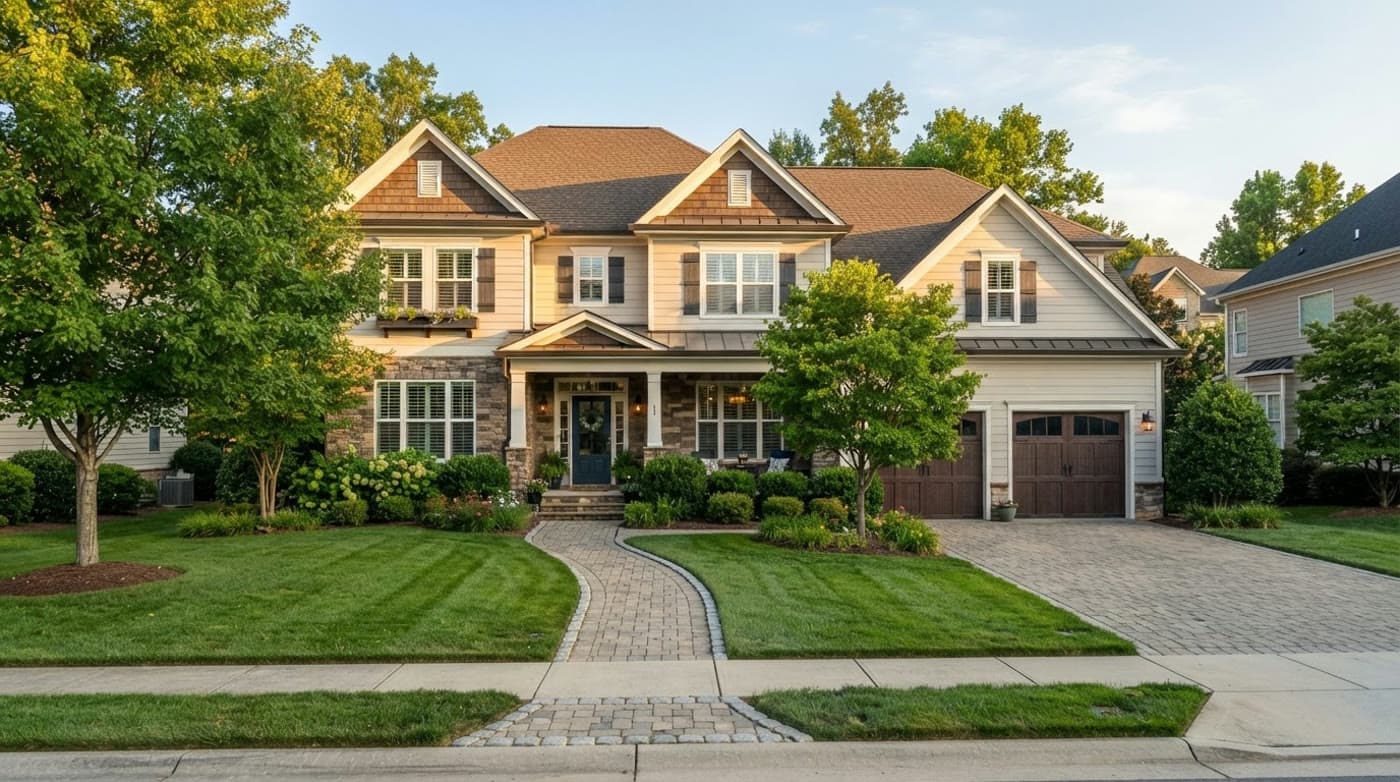
A well-kept suburban home with a clean asphalt shingle roof in late afternoon lightSelling, insuring, or just not ready

Everyone with a roof over 10 years old

A documented treatment beats an unanswered question.

Buyers ask about the roof, and a dated treatment record with the technical data behind it is a better answer than a shrug. On insurance we claim nothing: we do not say any insurer discounts, accepts, or extends coverage because of a treatment. If that matters to you, ask yours in writing first.

Thirty seconds on what actually happens.

Sound is off until you tap. The words are on screen either way.

How House Dressing roof rejuvenation works
Transcript

Asphalt shingles do not fail all at once. Sun bakes the oil out, and they dry, curl, and shed their granules. House Dressing puts the oil back. A trained applicator mists it on in a single visit. Flexibility returns, and the granules lock down. Patented, plant-based, and up to six more years from the roof you already have.

2 to 4hrs

On the roof

1visit

Done the same day

0

Tear-off, no dumpster

How it works

Four steps. One visit. No ladder for you.

  1. 01

    Inspect

    Dealer checks shingle age, brittleness, granule loss, and whether the roof qualifies.

  2. 02

    Treat

    House Dressing is mist-applied across the entire roof surface in a single visit.

  3. 03

    Absorb

    The plant-derived oil penetrates the asphalt matrix and rebuilds flexibility from inside.

  4. 04

    Protect

    Granules lock back in. The roof keeps shedding water like it did when it was new.

The math

$20k to $40k

Typical full replacement

$3k to $6k

Typical treatment, single-family roof

Up to 6 yrs

Added roof life per treatment, manufacturer figure

Figures in USD; Canadian applicators quote in CAD. Your applicator prices your roof after inspecting it, and the quote varies with size, pitch, condition and market.

The proof

Tested against nothing, and against the market leader.

These are the manufacturer published bench results, not ours. The row worth a second look is granule adhesion.

PropertyUntreatedMarket leaderHouse Dressing
Granule adhesionBaseline17% better50% better
Pliability at 55FFailPassPass
Sun bleachingBaselineShort termLong lasting

From the manufacturer technical data sheet dated 31 July 2026. The manufacturer does not name the market-leading product it tested. Bench results are not a prediction for any particular roof: condition, shingle type, weather, preparation and application rate all move the outcome.

Patented chemistry

Semi-epoxidized soybean oil from the Iowa State University team.

Not biodiesel, not raw vegetable oil, not a methyl ester blend. US Patent 11773265B2, with peer-reviewed research behind it.

Read the science

Ask about the 10-year plan.

The treatment on its own comes without a warranty. Participating applicators offer the 10-Year Roof Care Program, a maintenance plan that includes a 10-year limited warranty, so ask yours about it and read what it covers before you sign. We also publish the data: ask us for the technical data sheet and the test reports, and we send them.

How it compares to Roof Maxx, GoNano, Fresh Roof and Roof Rejuvenate.

Each competitor row is paraphrased from that brand's own public website as of August 2026. Terms change, so confirm with the brand before you buy from anyone, including us.

House Dressing

What it says it is

SESO, semi-epoxidized soybean oil. Engineered to interact with the oxidized asphalt binder, not only soften it. Issued US patent from the Iowa State University team.

Warranty position

The treatment alone carries none. The 10-Year Roof Care Program, offered through participating applicators, includes a 10-year limited warranty.

What to ask before you buy

Ask for the TDS and the test reports. We send them.

Roof Maxx

What it says it is

Describes its product as a soybean-based treatment using a soy methyl ester emulsion.

Warranty position

Advertises a 5-year flexibility warranty.

What to ask before you buy

Ask what the warranty covers, what it excludes, and whether it is prorated.

GoNano NuRoof

What it says it is

Describes an organosilane and organosiloxane nano formula that penetrates the shingle and forms a hydrophobic barrier. Not an oil.

Warranty position

Advertises a limited warranty of up to 15 years, depending on roof age, condition and location.

What to ask before you buy

Ask which tier your roof qualifies for and what the limited terms exclude.

Fresh Roof

What it says it is

Describes a plant-based soybean product it calls GreenSoy Technology.

Warranty position

Advertises a 6-year performance warranty when applied by a certified dealer.

What to ask before you buy

Ask which tests are published and who ran them.

Roof Rejuvenate

What it says it is

Describes a corn-based, USDA-certified bio-based rejuvenator developed by Colorbiotics, a Sika company.

Warranty position

Check their site. Terms vary by applicator.

What to ask before you buy

Ask what the extension claim is based on and who applies it in your area.

All trademarks belong to their respective owners. Nothing in the bench test table above identifies any brand listed here.

Homeowner questions

Everything people ask before they book.

  • What is roof rejuvenation?

    Roof rejuvenation is a maintenance treatment for asphalt shingle roofs. A plant-based oil is mist-applied across the roof and soaks into the asphalt, replacing some of the oil that sun and heat have baked out. It helps restore flexibility and helps hold granules in place. It is not a coating, not a sealant and not a repair.

  • Does roof rejuvenation actually work?

    The honest answer is: it depends on the product and the roof. House Dressing is built on a patented, semi-epoxidized soybean oil from the original Iowa State University research team. In bench testing published on the manufacturer technical data sheet, granule adhesion improved 50 percent against untreated shingles, and treated shingles passed the cold pliability test the untreated control failed. Bench results are not your roof; they are the mechanism demonstrated under test conditions. On a failing roof, nothing sprayed on top will save it.

  • How much does roof rejuvenation cost?

    Typical single-family jobs run $3,000 to $6,000 USD, depending on roof size, pitch and local labor; Canadian applicators quote in CAD. Full replacement in the same markets often runs $20,000 to $40,000. Your applicator prices your specific roof after looking at it, not from the driveway.

  • Is roof rejuvenation worth it?

    Run the math. A treatment in the low thousands, against a roof that would otherwise cost $20,000 to $40,000 to replace. Against untreated controls, independent testing measured granule adhesion improved by 50 percent. If your shingles are intact and the roof is dry, you are buying time for a fraction of replacement. If the roof is already leaking or cracking, the money is better spent on repair.

  • How long does a treatment last?

    As long as the shingle stays flexible and the granules stay anchored. Against untreated controls, independent testing measured granule adhesion improved by 50 percent, and the treated shingle still pliable at 55F where the untreated one failed. Roof condition, shingle type, climate, preparation and application rate all move the result. Many homeowners treat again a few years later to keep pushing replacement out.

  • How old is too old? Will it work on my roof?

    Age matters less than condition. A 20-year-old roof that is lying flat with intact shingles and a sound deck is a candidate. A 12-year-old roof with active leaks and cracked shingles is not, until it is repaired. Asphalt shingles only. Metal, tile, cedar and flat membrane roofs need a different product.

  • Is it safe around pets, kids, plants and gutters?

    With normal jobsite care, yes. It is a soybean-oil based product with no harsh solvents. Pets stay inside during the application, crews shield plants and siding from overspray, and once it cures everything goes back to normal. Ask your applicator for the safety data sheet before the job; they carry it.

  • Will my roof look different afterward?

    For a few days the roof looks slightly darker because the asphalt is saturated. Within a week or two it settles to its normal appearance. There is no film, no shine and nothing to peel, because the product is inside the shingle, not on top of it.

  • Is there a warranty?

    The treatment on its own comes without a warranty. If you want one, ask your applicator about the 10-Year Roof Care Program, a maintenance plan that includes a 10-year limited warranty. Read what it covers and what it excludes before you sign, as you would with any roof warranty. Either way, you get the evidence before you buy: an issued US patent, peer-reviewed research, a published technical data sheet and the test reports behind it.

  • Will a treatment affect my shingle manufacturer warranty?

    It can, so check first. If your shingles are still inside the manufacturer coverage window, read its terms before treating anything, because aftermarket treatments can affect coverage. Most roofs considered for rejuvenation are 10 years or older, where those warranties have usually prorated down, but yours is worth five minutes with the paperwork. An applicator will help you read it.

  • How is House Dressing different from Roof Maxx, GoNano, Fresh Roof and Roof Rejuvenate?

    Chemistry and proof. Roof Maxx describes a soy methyl ester emulsion, GoNano describes a silane-based nano formula, Fresh Roof describes a plant-based soy product, and Roof Rejuvenate describes a corn-based blend. House Dressing is semi-epoxidized soybean oil, engineered to interact with oxidized asphalt rather than only soften it, protected by an issued US patent, with third-party test data published on our science page. We also do not sell a warranty, where most of the others advertise one.

  • Can I buy it and spray it myself?

    No. House Dressing is supplied as a concentrate to trained applicators. It is diluted on site, applied with the right sprayer setup, and needs surface preparation and fall protection. Spraying concentrate straight onto a roof can damage the shingles.

  • How do I find a House Dressing applicator near me?

    Use the form on this page. Tell us where you are and roughly how old the roof is. We connect you with a trained applicator in your area, or help your existing roofer become one. If your roof is past the point where this helps, we will tell you that too.


Deeper dives: the chemistry and full spec sheet, treated roofs as they come in, and the full FAQ for every audience.

Find an applicator

Tell us where the roof is.

We connect you with a trained House Dressing applicator in your area, or help your own roofer become one. If your roof is past the point where this helps, we say so.

  • A person reads this, not a bot
  • No pressure, no pricing games
  • Serving homeowners across the US and Canada